
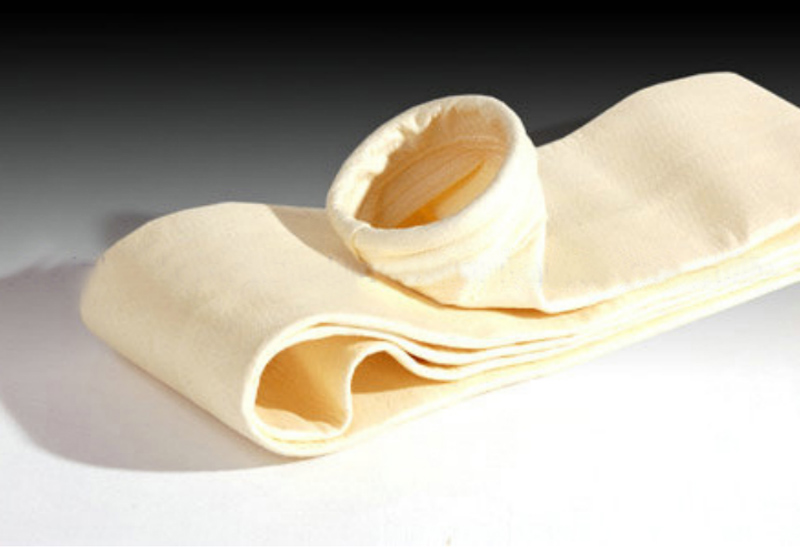
The acrylic fibers used in the filtration industry generally refer to homopolymer acrylic. Acrylic fiber was invented by DuPont in 1950. It has a round or octagonal appearance, a smooth surface, is not easily absorbent, can resist acid, alkali, and sunlight, and is not easily yellowed or dyed. It is commonly referred to as polyacrylonitrile fiber.
The acrylic fibers used in the filtration industry generally refer to homopolymer acrylic. Acrylic fiber was invented by DuPont in 1950. It has a round or octagonal appearance, a smooth surface, is not easily absorbent, can resist acid, alkali, and sunlight, and is not easily yellowed or dyed. It is commonly referred to as polyacrylonitrile fiber.
The strength of acrylic fiber itself is not very superior. Generally, polyester filament base fabric or a mixture of acrylic and polyester base fabric is used to enhance the strength of needle punched felt.
Acrylic needle punched felt is a fine fiber cloth that uses non-woven technology to enhance the interlaced arrangement of acrylic fibers, with evenly distributed gaps. The surface is treated by hot rolling, singeing, etc. to make it smooth and not easily blocked by dust. The temperature resistance of acrylic needle punched felt is 140-160 degrees Celsius. It is the best medium temperature filter material with acid resistance, alkali resistance, and hydrolysis resistance.
Our factory uses imported acrylic fibers as raw materials to make felt by needle punching method, and then undergoes special oil and water resistance treatment to obtainAcrylic medium temperature anti hydrolysis needle punched filter felt. This filter material has excellent chemical resistance and hydrolysis resistance, and is widely used for dust collection in power plants, waste incineration, asphalt, cement plants, coal mills, and other flue gas sources.
Burnt, calendered, heat set
| Material | Acrylic+Acrylic base fabric | |
| Gram weight (g/m2) | 500 | |
| Thickness (mm) | 2.0 | |
| Air permeability (L/㎡/S)
(m3/m2•min) |
150~300
14 |
|
| Fracture strength (N/5 × 20cm) | ≥800 | |
| Latitude | ≥1000 | |
| Elongation at break (%) | < 20 | |
| Latitude | < 45 | |
| Heat shrinkage @ 150degC, 90min | < 2% | |
| Tensile strength at break (Mpa/min) | 2.40 | |
| Operating temperature (℃) | ≤130 | |
| Instantaneous operating temperature (℃) | 160 | |
| Acid resistance | Excellent | |
| Alkali resistance | Good | |
| Antioxidant activity | Generally | |
| Abrasion | Good | |
| Hydrolytic stability | Excellent | |
| Post processing method | ||